Archived - AirPort Extreme: How to Update a Base Station's Firmware

Summary

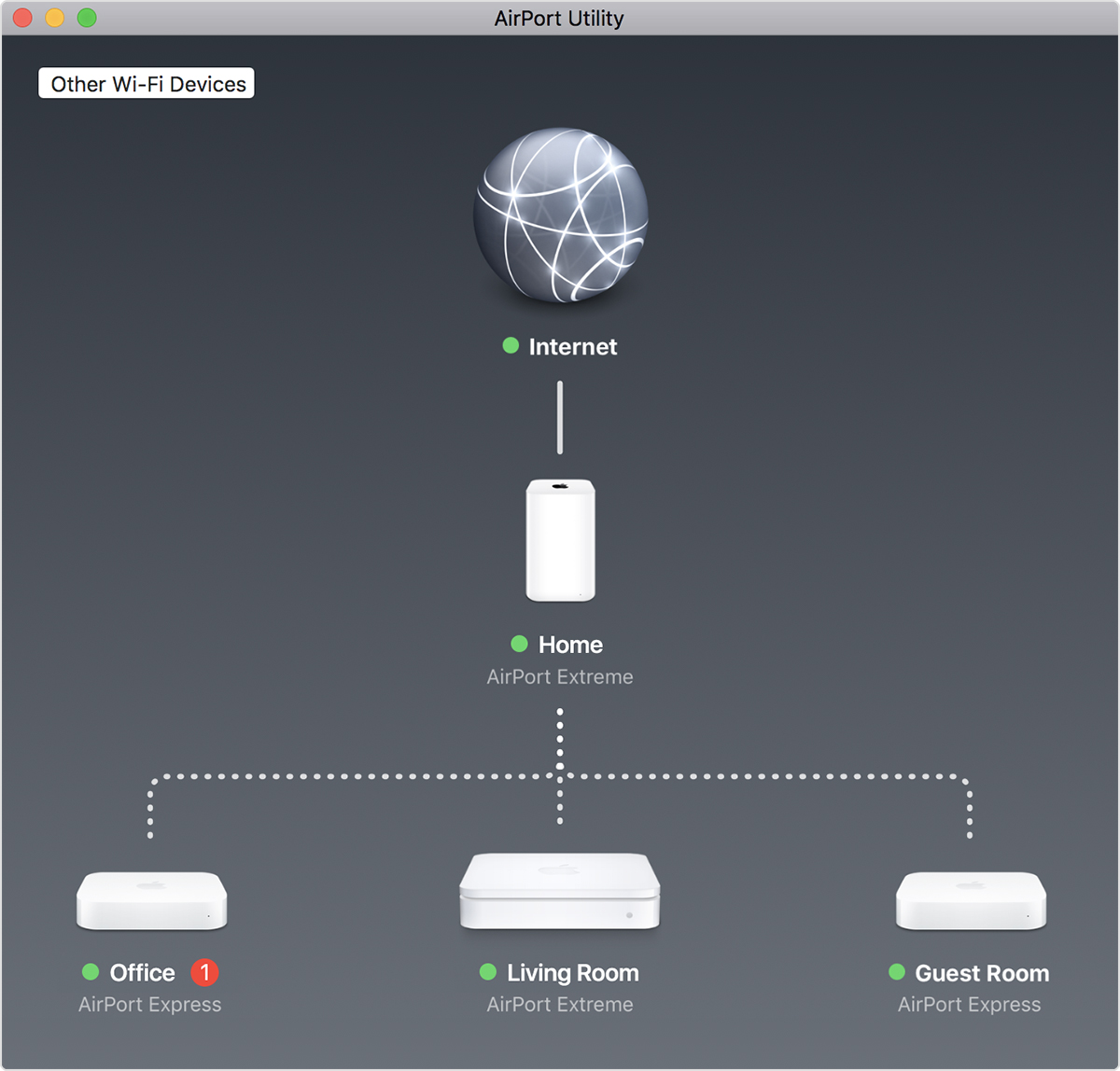
Learn how to update the firmware on the AirPort Extreme Base Station.

Products Affected

AirPort Extreme 802.11n (1st Generation), AirPort Extreme Base Station, AirPort Extreme Base Station POE/UL2043

This article has been archived and is no longer updated by Apple.

Connecting to the base station

The first step in updating firmware is to connect to the base station. There are several ways you can do this. Here are two examples:

  • Connect your computer to the base station using an Ethernet cable, or
  • Choose a base station's unique network name from the AirPort menu (Figure 1).


    Figure 1 Selecting the network "42Net"

Tip:

If your network uses multiple base stations, roaming, wireless distribution system (WDS), or a third-party router, you might have to use different types of connections. See the "Advanced information" section below to learn more about updating over other types of connections.


How to update

After you have connected to the base station, follow these steps to update the firmware:

  1. Open AirPort Admin Utility. It's in the Utilities folder inside the Applications folder (/Applications/Utilities/).
  2. Select the base station from the list (Figure 2).


    Figure 2 Selecting a base station


  3. Click Configure.
  4. Enter the base station's password when prompted (Figure 3).


    Figure 3 Entering the password


Ways to update

After you enter the password, there are three ways the firmware may be updated:


1. You see a prompt.

You may be prompted to update the firmware immediately after you enter the password (Figure 4).


Figure 4 AirPort Admin Utility prompting you to update


When AirPort Admin Utility opens it automatically checks the AirPort software installed on your computer to see if a later version of base station firmware is available. This may be the case if you used Software Update to install a later version of AirPort software. If so, it prompts you update the firmware. AirPort Admin Utility does not check for firmware you downloaded separately from Apple's website.

Updating via this automatic prompt is the correct choice when you have not downloaded a separate firmware update. If you do not wish to update via the automatic prompt, click Cancel, then use one of the next two methods.

2. You click the Default button.

Clicking the default button (Figure 5) reloads the latest version of firmware that is stored on your computer as part of the AirPort software.


Figure 5 Buttons in AirPort Admin Utility


This may be used as part of a troubleshooting procedure, sometimes called a "forced reload."

3. You click the Upload button.

Click the upload button (Figure 5) when you have downloaded a separate base station firmware update from Apple's website. This is normally a later version than the one included in the AirPort software . After clicking this button, a dialog appears so you can select the firmware that you downloaded.

Update all base stations

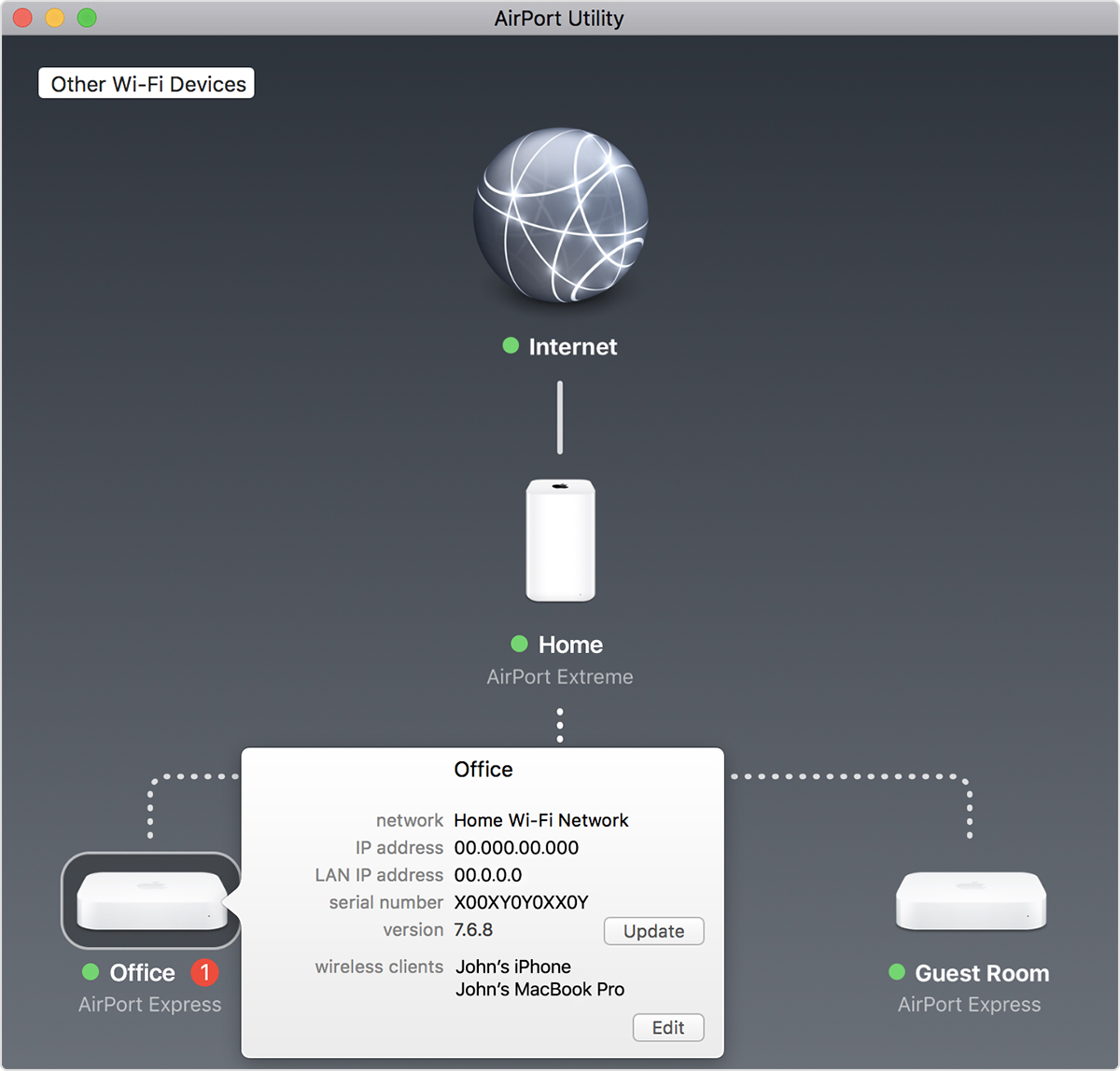
When you have multiple base stations, be sure to update all of them. For easy reference, the AirPort Admin Utility lists a base station's firmware version when you select it from the list (before you even click Configure, as in Figure 2). The firmware version also appears in the base station summary after clicking Configure.


Advanced information

You may connect to a base station directly or indirectly. In a direct connection, communication passes from your computer to the base station that's being updated without going through any other device. If you only have one base station, your connection is always direct. The examples above are direct connections.

In an indirect connection, communication passes through a third device (usually another base station or router) to reach the base station that is being updated. This can happen on networks configured for roaming and/or WDS, or that have third-party routers or access points. Direct connections are preferred but not required.

Base station firmware 5.3 or later improves the ability to update the base station over an indirect connection (firmware 5.3 is included with AirPort software version 3.3 and is also available for separate download). If your base station has not been updated to firmware 5.3 or later, or if you are in the process of updating to version 5.3, a direct connection is the most reliable.

Updates over an indirect connection will not work under some circumstances when using firmware prior to 5.3, so they are not the preferred method. They do often work, however. Attempting to update over an indirect connection is worthwhile if it will save you the effort of making a direct connection to an inaccessible base station (such as one mounted in a ceiling). If the indirect update is not successful, connect directly.

Tip: The way you can tell that an indirect attempt has been unsuccessful is that AirPort Admin Utility will display the progress indicator (looks like a spinning pinwheel) for over three minutes, remaining unresponsive to other input. When this happens, choose Force Quit from the Apple Menu, select AirPort Admin Utility from the dialog, and click the Force Quit button.

Note: Mac OS X 10.2, Microsoft Windows 2000, and Windows XP users must download the 5.3 firmware separately. The AirPort 3.3 software is for Mac OS X 10.3 or later only. Links to the Windows AirPort Admin Utility and the latest firmware are on the AirPort support page (http://www.apple.com/support/airport/).

Examples of indirect connection:

  • You connect wirelessly to the station with network name "A", which has a wired or wireless (WDS) connection to the target base station with network name "B".
  • You choose a base station's non-unique network name in the AirPort menu.
    Note: When base stations have the same network name, known as "roaming," then you may be passing through another base station to reach the target base station.


Ensuring a direct connection

If you can't use the direct methods described above, try one of these two methods:


  • Temporarily rename the base stations' networks.
  • Temporarily unplug all but the target base station.


This third method almost always works:


  1. Locate your computer near the target base station (or vice versa).
  2. On the computer, turn AirPort off in the AirPort menu.
  3. Turn AirPort on again.


Your computer should associate with the nearest base station when AirPort is turned back on, though unusual circumstances or sources of interference can keep this method from being 100 percent reliable.

Not helpful Somewhat helpful Helpful Very helpful Solved my problem
Ask other users about this article
in Apple Support Communities
See all questions on this article See all questions I have asked